
How Often Should You Change Your Tires?
Quick Answer: Change your tires when the tread reaches 4/32 of an inch, when they are 6 to 10 years old, or when you see cracks, bulges, or uneven wear, whichever comes first. Most tires last 50,000 to 70,000 miles, but age matters as much as mileage. A tire with good tread can still be unsafe if it is old.
Replacement vs Rotation: Not the Same Thing
Change your tires when the tread reaches 4/32 of an inch, when they are 6 to 10 years old, or when you see cracks, bulges, or uneven wear, whichever comes first. Most tires last 50,000 to 70,000 miles, but age matters as much as mileage. Many drivers mix up changing tires with rotating tires, so let us clear up the difference first.
- Changing your tires means taking the old tires off and putting new tires on. You do this when the tires are worn out, too old, or damaged. That is what this article is about.
- Rotating your tires means moving the tires you already have to different positions on the car, for example from the front to the back. You do this every 5,000 to 7,500 miles to make the tires wear evenly and last longer. You do not buy new tires when you rotate.
Rotation helps your tires last longer, but it does not make old tires new again. Even with perfect rotation, every tire reaches the end of its life. For the full rotation guide, see our article on how often should you rotate your tires.
The Three Rules: Tread, Age, and Condition
There is no single number that tells you when to replace tires. Use all three rules together. Whichever comes first is the answer.
- Tread depth: Replace at 4/32 of an inch for safety. The legal minimum is 2/32 of an inch, but by then the tire has already lost most of its wet grip.
- Age: Inspect tires every year after 5 years. Replace by 10 years, even if the tread still looks good. Rubber gets hard and cracks with age.
- Condition: Replace right away if you see cracks, bulges, cuts, exposed cords, or uneven wear.
A tire can fail any one of these rules while passing the other two. A 3-year-old tire with low tread needs replacing. A 9-year-old tire with deep tread also needs replacing, because the rubber is old. Check all three every time.
Tire Tread Depth Gauge
Tread Depth: When Is a Tire Worn Out?
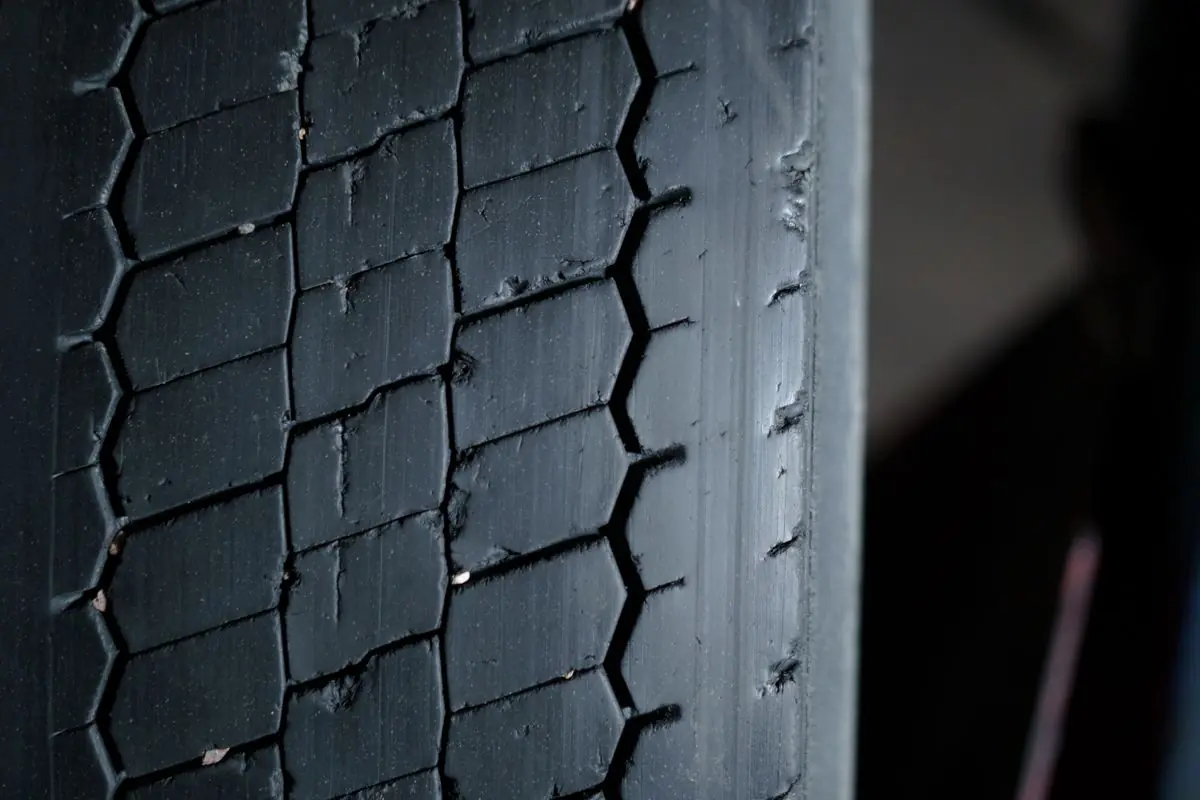
Tread depth is measured in 32nds of an inch. A new tire usually starts at 10/32 or 11/32 of an inch. As you drive, the tread wears down. Less tread means less grip, especially on wet roads.
| Tread Depth | What It Means |
|---|---|
| 10/32 in or more | New tire, full grip |
| 8/32 in | Near new, very good grip |
| 6/32 in | Safe, but losing snow and hydroplaning resistance |
| 5/32 in | Reduced snow traction |
| 4/32 in | Reduced wet traction, time to replace |
| 3/32 in | Critically low, replace now |
| 2/32 in | Legal minimum in most US states, unsafe |
The legal minimum is 2/32 of an inch, but safety experts say to replace at 4/32. Here is why. AAA tested tires at 4/32 of an inch on wet pavement. From 60 mph, they needed 43 percent more distance to stop than new tires. That is 87 extra feet. When the car on new tires had stopped, the car on worn tires was still moving at 40 mph. That is the difference between stopping in time and hitting something.
Winter tires lose their snow grip even earlier. Replace winter tires at 5/32 to 6/32 of an inch.
Tire Age: How Old Is Too Old?
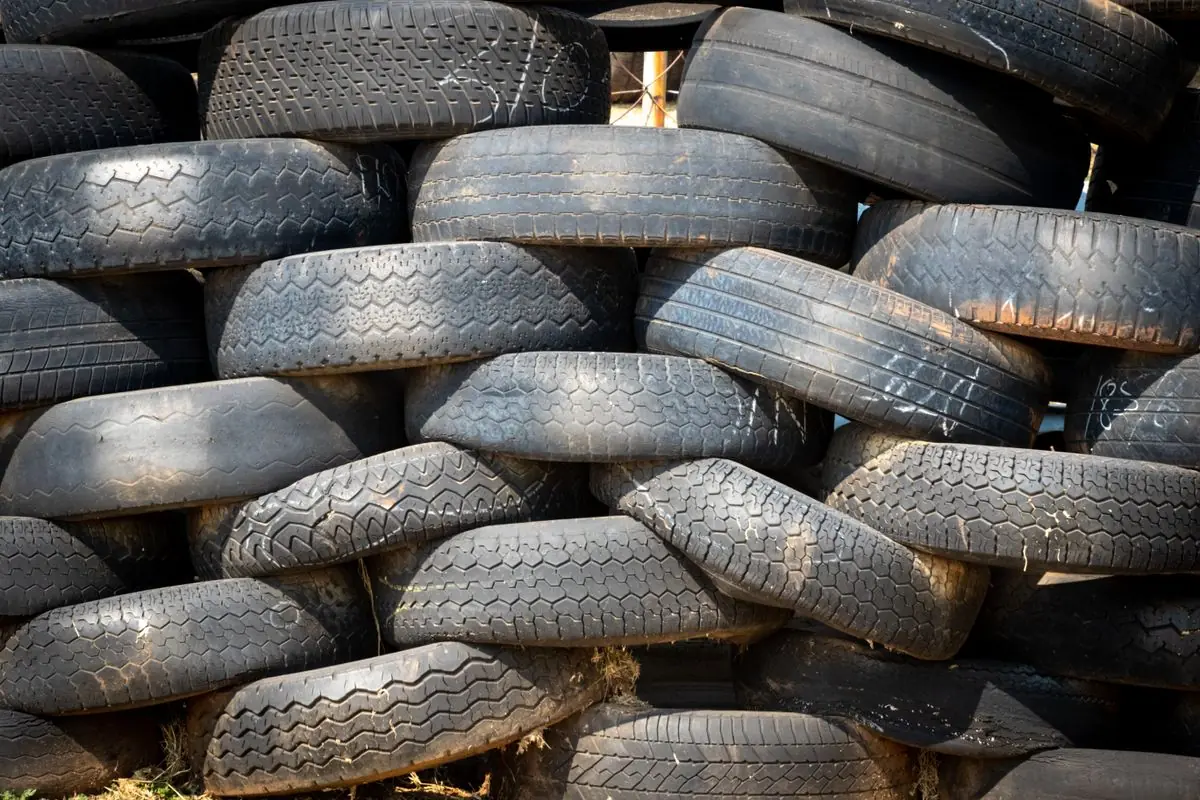
Rubber degrades over time, even if the tire looks fine and the car sits in a garage. Heat, sunlight, and oxygen slowly break down the rubber. The tire gets hard, cracks appear, and the risk of a blowout goes up.
| Tire Age | What to Do |
|---|---|
| 0 to 5 years | Normal use, inspect at every service |
| 5 to 6 years | Inspect at least once a year, look for cracks |
| 6 to 10 years | Consider replacement, even if tread is good |
| 10 years or more | Replace right away, no matter how the tread looks |
This guidance comes from tire makers like Michelin and Continental, from car makers, and from NHTSA. It applies even to a spare tire that has never been used. A spare tire ages too. Michelin says to replace a spare 10 years after it was made.
To find the age of a tire, read the DOT code on the sidewall. The last four digits tell you the week and year it was made. For example, 2419 means week 24 of 2019. If the code has only three digits, the tire was made before 2000, and it should have been replaced long ago.
Mileage: How Long Do Different Tire Types Last?
Mileage varies a lot by tire type. The treadwear warranty on the tire is the maker's estimate, but it is not a guarantee. Your driving style, the roads, the climate, and how well you keep the tires inflated all affect how long they last.
| Tire Type | Typical Mileage |
|---|---|
| All-season | 50,000 to 70,000 miles |
| Touring and grand touring | 60,000 to 80,000 miles |
| All-weather | 40,000 to 60,000 miles |
| Summer and performance | 20,000 to 40,000 miles |
| Winter and snow | 25,000 to 40,000 miles |
| All-terrain | 40,000 to 60,000 miles |
| Mud-terrain | 30,000 to 50,000 miles |
The average US driver covers about 14,489 miles per year, according to Kelley Blue Book. At that rate, a set of all-season tires lasting 60,000 miles will last about four years. A low-mileage driver who only drives 5,000 miles a year will hit the age limit before the mileage limit. That is why age matters as much as mileage.
To get the full life from your tires, keep them at the right pressure, rotate them on schedule, and get the alignment checked if you see uneven wear. For the rotation schedule, see how often should you rotate your tires.
How to Check Your Tires at Home
You can check your tires in five minutes with two coins and your eyes. Do this once a month.
The penny test
Put a penny upside down into the tread groove, with Lincoln's head pointing down. If you can see the top of Lincoln's head, the tread is at or below 2/32 of an inch. Replace the tire now. Check several spots around the tire, because tread can wear unevenly.
The quarter test
Put a quarter upside down into the tread, with Washington's head pointing down. If you can see the top of Washington's head, the tread is at or below 4/32 of an inch. Wet traction is already reduced. Start shopping for new tires.
Check the pressure
Use a tire pressure gauge when the tires are cold, meaning the car has not been driven for at least 3 hours. Inflate to the pressure on the driver's door sticker, not the number on the tire sidewall. The sidewall number is the maximum pressure, not the right pressure for your car. Underinflated tires wear out faster and waste fuel. NHTSA says that underinflated or worn tires contribute to more than 11,000 crashes a year in the United States.
Check the age and condition
Read the DOT code to find the tire's age. Then look at the sidewall for cracks, bulges, cuts, or exposed cords. Run your hand lightly over the tread to feel for uneven wear, cupping, or bald spots. If you feel a bulge on the sidewall, replace the tire right away. A bulge means the inner layers are damaged, and the tire can blow out without warning.
Warning Signs You Need New Tires Now
Replace the tire right away if you see any of these:
- Sidewall bulge: the tire can blow out at any moment.
- Visible cords: the rubber has worn through to the fabric or steel inside.
- Deep cracks in the sidewall: the rubber is old and breaking down.
- Cuts or gouges: especially on the sidewall. A puncture in the sidewall cannot be repaired.
- Repeated air loss: if a tire keeps losing air, it may have a slow leak or a damaged valve.
- Vibration or shaking: if the car vibrates at highway speed and the tires are old or worn unevenly, the tires may be the cause.
- Tread worn to the wear bars: the small raised bars across the tread grooves. When the tread is level with these bars, the tire is at 2/32 of an inch and must be replaced.
A puncture in the center of the tread that is 1/4 inch or smaller can often be repaired with a patch, which costs about $20 to $40. A puncture in the shoulder or sidewall cannot be repaired. The tire must be replaced.
Typical Tire Replacement Costs
No top-ranking article gives cost numbers, but cost is the first question most drivers ask. Here are typical US prices. They vary by tire size, brand, and shop.
| Item | Typical Cost |
|---|---|
| One budget all-season tire | $100 to $150 |
| One mid-range all-season tire | $150 to $250 |
| One premium or large-size tire | $250 to $400 or more |
| Set of four all-season tires | $400 to $1,000 or more |
| Mounting and balancing, per tire | $25 to $50 |
| Wheel alignment | $75 to $150 |
| Tire disposal fee, per tire | $3 to $10 |
A set of four tires for a normal sedan usually costs $400 to $800 with mounting and balancing. A large SUV or truck can cost $800 to $1,500 or more. An alignment is strongly recommended with new tires, and it is a must if the old tires showed uneven wear.
New Tires Go on the Rear Axle
This surprises many drivers, but it is the standard advice from tire makers and safety experts. When you replace only two tires, the new tires go on the rear axle, not the front. This applies to front-wheel drive, rear-wheel drive, and all-wheel drive cars.
The reason is stability. Worn rear tires can cause the back of the car to slide out in wet conditions, which is called oversteer. Oversteer is hard to control and can cause a spin. New tires on the rear keep the back of the car planted.
For all-wheel drive cars, replace all four tires at once if you can. Mismatched tread depth can damage the differential and the transfer case. Keep all four tires within about 2/32 of an inch of each other.
Best Time of Year to Buy Tires
Tire prices change with the seasons, and timing can save you money.
- Fall, especially October and November: this is the best time to buy winter tires, and many shops run sales on all-season tires too.
- Black Friday: tire retailers often run their biggest discounts of the year.
- Spring: shops clear out winter tires at a discount.
- Avoid buying one tire at a time in an emergency. A single tire bought in a hurry often costs more than a tire bought as part of a set during a sale.
Store off-season tires in a cool, dry place away from sunlight. Stack them flat or hang them. Do not store them near electric motors, which give off ozone that ages rubber faster.

Frequently Asked Questions
How many miles do tires last?
Most all-season tires last 50,000 to 70,000 miles. Touring tires can last 60,000 to 80,000 miles. Performance and winter tires last less, about 20,000 to 40,000 miles. Age matters too. Replace by 10 years even if the tread looks good.
Can I replace just one tire?
It is best to replace tires in pairs or all four. If you must replace one, match the brand, model, and size of the other tires as closely as you can. On an all-wheel drive car, replace all four to avoid damaging the drivetrain.
Can I replace just two tires?
Yes. Put the two new tires on the rear axle, even on a front-wheel drive car. New tires on the rear prevent the back of the car from sliding out in wet conditions.
Do I need an alignment with new tires?
An alignment is strongly recommended with new tires. It is a must if the old tires showed uneven wear. An alignment costs about $75 to $150 and helps the new tires last their full life.
How do I read the DOT code to find my tire's age?
Look for the letters DOT on the sidewall, followed by numbers and letters. The last four digits are the week and year of manufacture. For example, 2419 means the tire was made in week 24 of 2019.
What is the difference between changing tires and rotating tires?
Changing tires means putting new tires on the car. Rotating tires means moving your existing tires to different positions so they wear evenly. Rotation is done every 5,000 to 7,500 miles. Changing is done when the tires are worn out, too old, or damaged. For the rotation guide, see how often should you rotate your tires.
Reviewed by the AutoFixr Editorial Team. Every fact in this guide was checked against NHTSA guidance, AAA test data, and tire maker recommendations from Michelin and Continental. Prices are typical US ranges and vary by tire size, brand, and shop.