
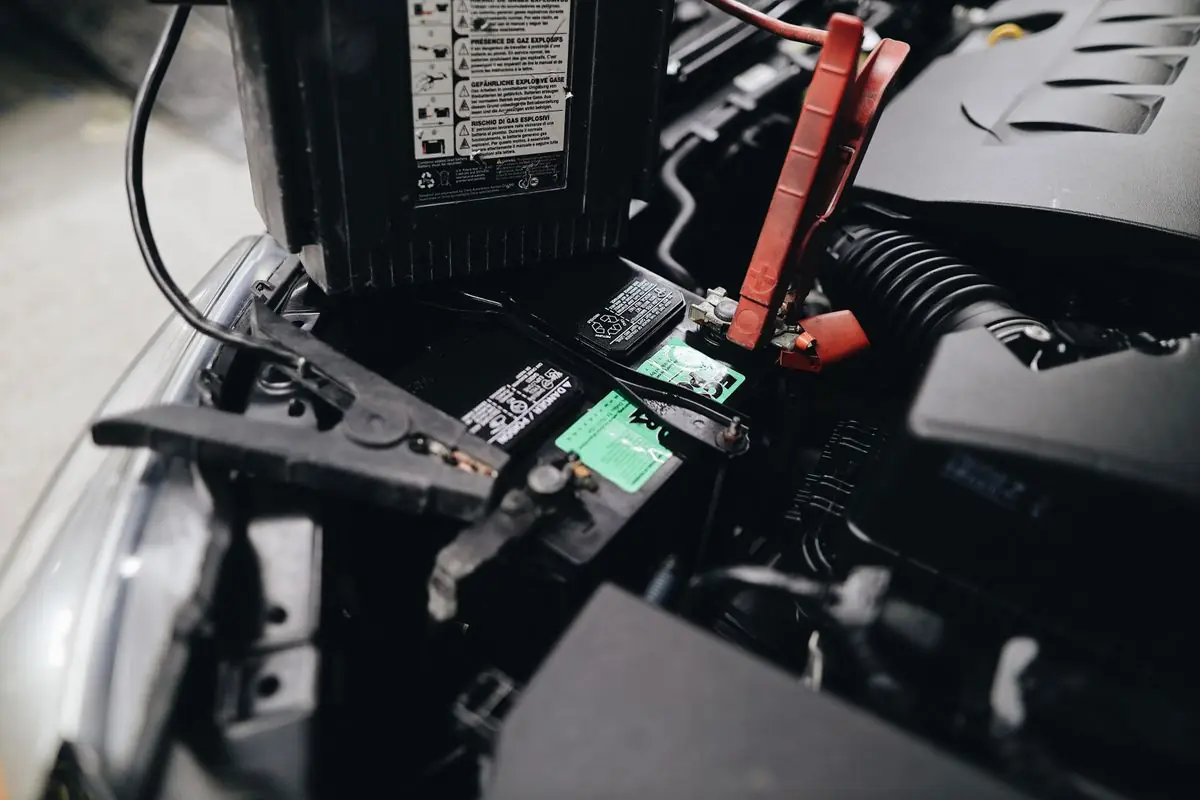
How to Use Jumper Cables Safely: A Step-by-Step Guide
Quick Answer: To use jumper cables, connect red to the dead battery positive, red to the donor battery positive, black to the donor battery negative, and black to unpainted metal on the dead car. Start the donor car, wait 2 to 5 minutes, then start the dead car. Drive 20 to 30 minutes after. Never clamp to the dead battery.
What Are Jumper Cables?
To use jumper cables, connect red to the dead battery positive, red to the donor battery positive, black to the donor battery negative, and black to unpainted metal on the dead car. Then start the donor car, wait 2 to 5 minutes, and start the dead car. Jumper cables are the thick wires with clamps on each end that carry the power. The red cable is positive and the black cable is negative.
When your battery dies, your car cannot start. The starter motor needs power from the battery. Jumper cables borrow power from another car, called the donor car. Once your engine is running, your own alternator takes over and recharges the battery.
Learning how to jump start a car with cables is a skill every driver should have. A dead battery can happen to anyone, in any parking lot, at any time. The job takes about 10 minutes once you know the steps.
Dead Battery, Bad Starter, or Bad Alternator?
Before you connect any cables, check what is actually wrong. Jump starting only helps a dead battery. It will not fix a bad starter or a bad alternator.
| Symptom | Likely Cause | Will a Jump Help? |
|---|---|---|
| Clicking sound, lights dim, nothing happens | Dead battery | Yes |
| No sound at all, no lights, totally dead | Dead battery | Yes |
| Lights work fine, but the engine will not crank | Bad starter | No, call a mechanic |
| Car starts with a jump, then dies again soon after | Bad alternator | No, the battery is not charging |
| Car starts with a jump and runs fine after | Dead battery (lights left on, old battery) | Yes |
Turn the key. If you hear a fast clicking sound, the battery is weak. If the headlights are dim or off, the battery is weak. If the lights are bright and the engine does nothing, the starter may be bad.
You can also test the battery with a multimeter. A healthy battery reads 12.6 volts or higher. A reading under 12 volts means the battery is weak or dead. Car batteries last about 4 years.
What You Need Before You Start
You need jumper cables at least 10 to 12 feet long with a 400-amp rating or higher, a donor car with a good battery, safety glasses, and gloves.
Park the donor car close to your car, nose to nose or side by side. The cables must reach both batteries. Do not let the two cars touch each other. Turn off both cars. Put automatics in Park. Put manuals in Neutral. Set the parking brake on both cars. Turn off the headlights, radio, heater, and air conditioning in both cars.
Open both hoods. Find the batteries. The positive terminal is marked with a plus sign (+). It may have a red cover. The negative terminal is marked with a minus sign (-). Clean off any white or green corrosion with a rag if you can.
Jumper Cable Connection Order
Step-by-Step Guide
The order matters. Connect the cables in this exact order. Getting it wrong can blow a fuse, damage the car's computer, or cause a spark near the battery.
Step 1: Red clamp to the dead battery positive. Connect one red clamp to the positive (+) terminal of the dead battery. Make sure it grips the metal tightly.
Step 2: Red clamp to the donor battery positive. Connect the other red clamp to the positive (+) terminal of the good battery.
Step 3: Black clamp to the donor battery negative. Connect one black clamp to the negative (-) terminal of the good battery.
Step 4: Black clamp to unpainted metal on the dead car. Connect the last black clamp to a piece of unpainted metal on the dead car, such as a bolt on the engine block. Do NOT connect it to the dead battery. A dead battery can leak flammable hydrogen gas.
Step 5: Start the donor car. Let it idle for 2 to 5 minutes. This sends power into the dead battery. If the dead car still will not start, hold the donor car at about 2,000 rpm for a minute.
Step 6: Start the dead car. It should turn over and start. If it only clicks, wait two more minutes and try again. Do not crank for more than 5 seconds at a time.
Step 7: Let both cars run. Once the dead car is running, let both cars idle for a minute or two. Do not turn anything off yet.
Step 8: Remove the cables in reverse order. See the next section. Do not let the clamps touch each other.
How to Remove the Cables
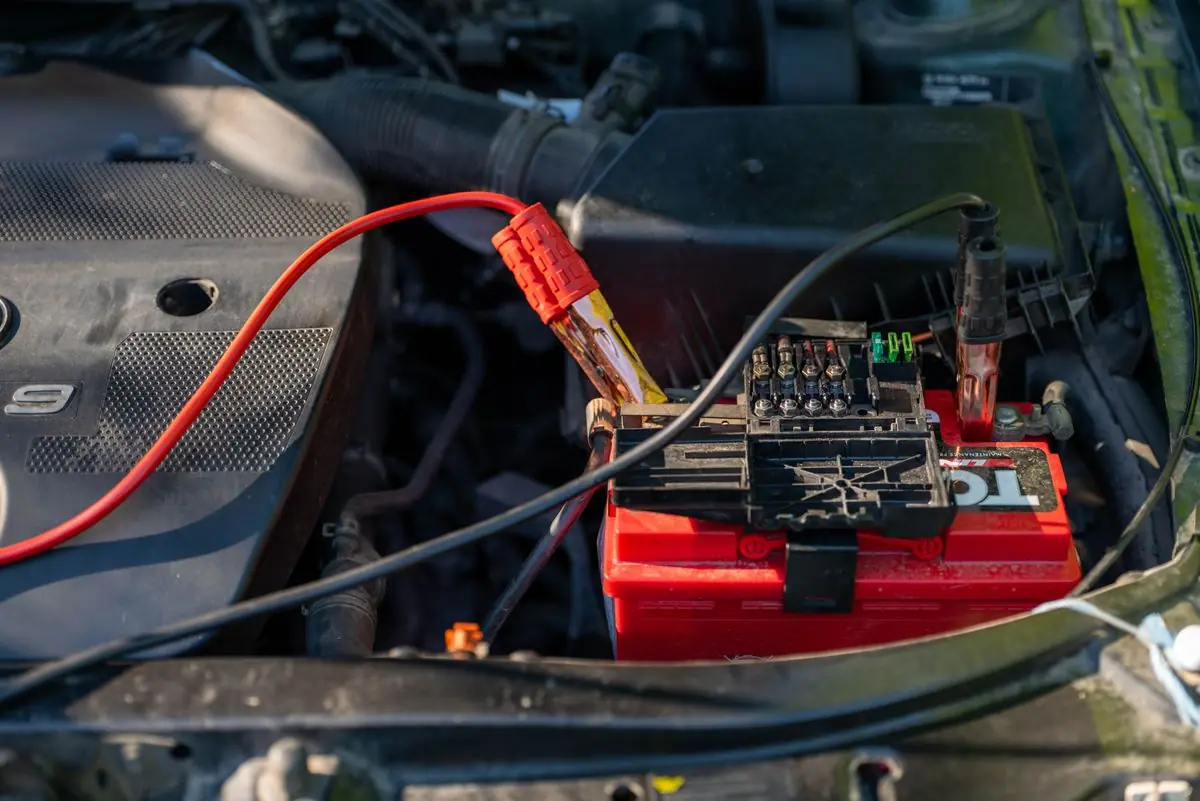
Remove the cables in the exact reverse order.
- Black clamp from the unpainted metal on the dead car.
- Black clamp from the donor battery negative.
- Red clamp from the donor battery positive.
- Red clamp from the dead battery positive.
Hold each clamp away from the others as you remove it. Do not let a red clamp touch a black clamp. A spark can damage the car's electronics.
What to Do After the Jump Start
A jump start is not a fix. It is a rescue. Your battery is still weak. Do this right after:
- Drive for 20 to 30 minutes. The alternator needs time to recharge the battery. Highway driving works best.
- Do not turn the car off right away. If you stop the engine after 5 minutes, it may not start again.
- Get the battery tested. Most auto parts stores test batteries for free.
- Check why it died. Did you leave the lights on? Is the battery over 4 years old? Is there corrosion on the terminals? Fix the cause, or it will happen again.
- Check your other fluids. A simple check like how to check oil takes two minutes and can catch problems early.
If the car starts fine the next morning, the battery may be okay. If it dies again, the battery is likely worn out. Replace it.
What If the Car Still Will Not Start?
If the car will not start after a jump, the problem is not just a dead battery.
- Bad starter. You hear one loud click, or nothing at all, but the lights work fine. The starter motor is not turning the engine. This needs a mechanic.
- Bad alternator. The car starts with a jump, then dies again after a few minutes. The alternator is not charging the battery. See our guide on car dashboard symbols and meanings to know what the warning lights mean.
- Completely dead battery. A battery dead for a long time may not take a charge at all. Replace it.
- Loose or corroded connections. Clean the cables and tighten them. Then try the jump again.
- Wrong connections. Check that each clamp is on the right terminal and gripping metal, not plastic or corrosion.
If none of these fix it, call a mechanic or roadside assistance. Do not keep cranking the starter. You can drain the donor battery too.
How to Buy the Right Jumper Cables
Not all jumper cables are the same. Cheap thin cables may not carry enough power.
| Feature | What to Look For |
|---|---|
| Length | At least 10 to 12 feet |
| Amp rating | 400-amp minimum, 500-amp recommended for trucks and SUVs |
| Wire thickness | Thicker wire carries more power, look for 4-gauge or 6-gauge |
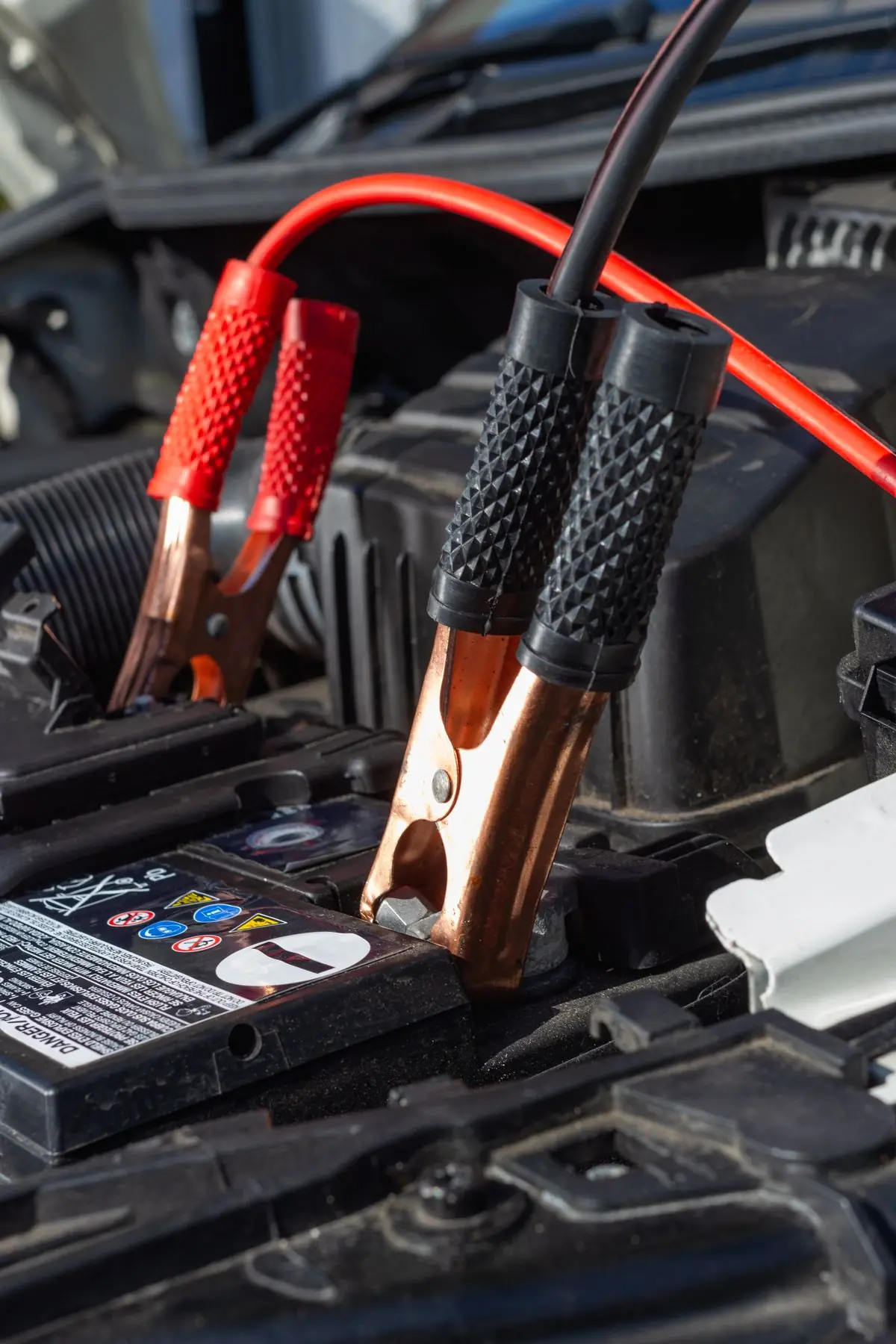
| Clamps | Strong metal clamps with insulated handles and a good grip |
| Storage | A carry bag or case keeps them tidy in the trunk |
A good set costs $25 to $60. Cheap $10 cables are often too thin to start a larger car. Buy a set once and keep it in your trunk. Check the clamps once a year for rust or damage.
Jumper Cables vs Portable Jump Starters
A portable jump starter is a small battery pack that can jump your car without a second car.
| Feature | Jumper Cables | Portable Jump Starter |
|---|---|---|
| Needs a second car | Yes | No |
| Cost | $25 to $60 | $60 to $150 |
| Size | Long cables, need trunk space | Small, fits in a glove box |
| Safety features | None, you must get the order right | Built-in protection |
| Ease of use | Moderate | Very easy, one person |
| Best for | Drivers who want a cheap, simple tool | Drivers who often park alone |
A portable jump starter is the easier tool, especially if you drive alone at night. But jumper cables are cheaper and never need charging. Many drivers keep both. If you buy a jump starter, keep it charged and check it every few months.
Mistakes to Avoid
- Wrong order. Red to dead positive, red to donor positive, black to donor negative, black to ground.
- Last black clamp to the dead battery. Always connect it to unpainted metal. The battery can give off hydrogen gas.
- Letting clamps touch. A red clamp touching a black clamp causes a spark and can blow a fuse.
- Reversing red and black. This can damage the car's computer. Check the plus and minus signs twice.
- Turning the car off too soon. Drive 20 to 30 minutes after a jump.
- Jumping a damaged battery. If the case is cracked, swollen, or leaking, do not jump it. Call a mechanic.
Safety Note
Batteries contain acid and give off flammable gas. Always wear safety glasses. Keep your face away from the battery when you connect the last clamp. Do not smoke near a battery. Never lean over a battery. If the case is cracked, swollen, frozen, or leaking, do not try to jump it. Call a professional. If acid touches your skin or eyes, wash with clean water right away and seek medical help.
Frequently Asked Questions
How long should I let the donor car run before starting the dead car? Let it idle for 2 to 5 minutes. If the dead car still will not start, hold the donor car at about 2,000 rpm for one minute and try again.
How long should I drive after a jump start? Drive for 20 to 30 minutes. Highway driving works best. Do not turn the engine off right after the jump.
Can I jump start a car with a completely dead battery? If the battery is fully dead but not damaged, a jump can still work. If it has been dead for a long time, or the case is swollen or cracked, replace it.
Is it safe to jump start a car in the rain? Yes, if you are careful. Keep the clamps dry as much as you can. The voltage is low, but the current is high, so take care.
What does it mean if my car needs a jump start every morning? The battery is likely worn out. It may also be a bad alternator. Get both tested for free at an auto parts store.
Can jump starting damage my car? It can if you connect the cables in the wrong order or reverse the clamps. That can blow fuses or damage the computer. Follow the four steps in order.
The Bottom Line
A dead battery is a small problem when you know the steps. Keep a set of good cables in your trunk. Practice the connection order once so you are ready when it happens. If your car needs a jump more than once, get the battery tested. For more basic car care, read our guide on how often should you change your tires.