

How to Change Transmission Fluid: A Step-by-Step Guide for Beginners
Quick Answer: You can change transmission fluid at home in about 45 to 90 minutes. Warm up the car, lift it safely, remove the transmission pan, drain the old fluid, replace the filter and gasket, then refill with the correct fluid type. A drain and fill costs $50 to $150 in parts. Never flush a high mileage transmission with unknown service history.
What Is Transmission Fluid?
You change transmission fluid by draining the old fluid out of the transmission pan, replacing the filter and gasket, and refilling it with fresh fluid of the correct type. The job takes 45 to 90 minutes at home and costs $50 to $150 in parts. Change the fluid every 30,000 to 60,000 miles. The fluid itself does four jobs at once: it lubricates the moving parts, cools the transmission, moves power through the hydraulic system so gears can shift, and keeps the rubber seals soft so they do not leak.
When the fluid gets old, it turns dark and smells burnt. Shifting gets rough. The transmission slips. In the worst case, the transmission fails. A rebuild costs $1,800 to $3,500, and a full replacement can cost more than $5,000. Fresh fluid is cheap insurance. Before you start, learn how to check the fluid first in our guide on how to check transmission fluid.
How Often Should You Change It?
Always check your owner's manual first. It lists the exact interval for your model. The table below gives the common ranges.
| Driving Condition | Automatic | Manual |
|---|---|---|
| Normal driving | Every 60,000 to 100,000 miles | Every 30,000 to 60,000 miles |
| Severe duty (towing, short trips, heavy traffic) | Every 30,000 to 50,000 miles | Every 30,000 to 60,000 miles |
| CVT | Every 30,000 to 50,000 miles | Not applicable |
Many car makers call their fluid "lifetime fill." That phrase is mostly marketing. Mechanics advise changing the fluid by 100,000 to 150,000 miles even on these cars. So, how often to change transmission fluid in real life? A safe rule is every 30,000 to 60,000 miles. Check the fluid once a month. If it looks dark or smells burnt, change it soon.
Signs It Needs Changing
Watch for these warning signs:
- Rough or delayed shifting. The car hesitates or jerks when it changes gears.
- Slipping gears. The engine revs up, but the car does not speed up.
- Dark or burnt smelling fluid. Fresh fluid is red or pink.
- Strange noises. Whining, humming, or clunking from the transmission.
- No drive engagement. You shift into drive, and nothing happens for a few seconds.
- Warning light. If other dash lights are on too, read our guide on car dashboard symbols and meanings.
If you notice two or more of these signs, check the fluid right away.
Drain and Fill vs Full Flush
Drain and Fill vs Full Flush
There are two ways to replace transmission fluid. Picking the wrong one can damage an older transmission.
| Method | Fluid Replaced | Best For |
|---|---|---|
| Drain and fill | 30 to 50 percent | Most cars and high mileage cars |
| Full flush | Nearly 100 percent | Low mileage cars with regular service |
A drain and fill is the safer choice for most drivers. It is simple, cheap, and gentle. You can repeat it after a few thousand miles to refresh more fluid. A full flush replaces almost all the fluid at once, but it has a risk. In a high mileage car that never had a fluid change, old sludge can be holding worn parts together. A flush can wash it away and cause sudden slipping. Over 100,000 miles with unknown history, use a drain and fill only.
Tools and Parts You Need
Parts: the correct fluid for your car (check the manual for the spec, such as Dexron VI, Mercon V, Toyota WS, or Honda ATF-DW1), a new filter kit (filter, gasket, and O-ring), and new pan bolts if the old ones are rusted.
Tools: a socket set (10 mm fits many pan bolts), an inch-pound torque wrench, a drain pan (at least 5 quarts), a long neck funnel, a plastic scraper, clean rags, a jack and jack stands, safety glasses, and gloves. The fluid type matters more than the brand. Do not mix different specs.
Step-by-Step Guide
Follow these steps in order. The job takes 45 to 90 minutes.
Step 1: Warm up the transmission. Drive for 10 to 15 minutes. Warm fluid drains faster. Park on flat ground.
Step 2: Lift the car safely. Raise the front with a jack. Place jack stands under the frame. Never work under a car held up by a jack alone.
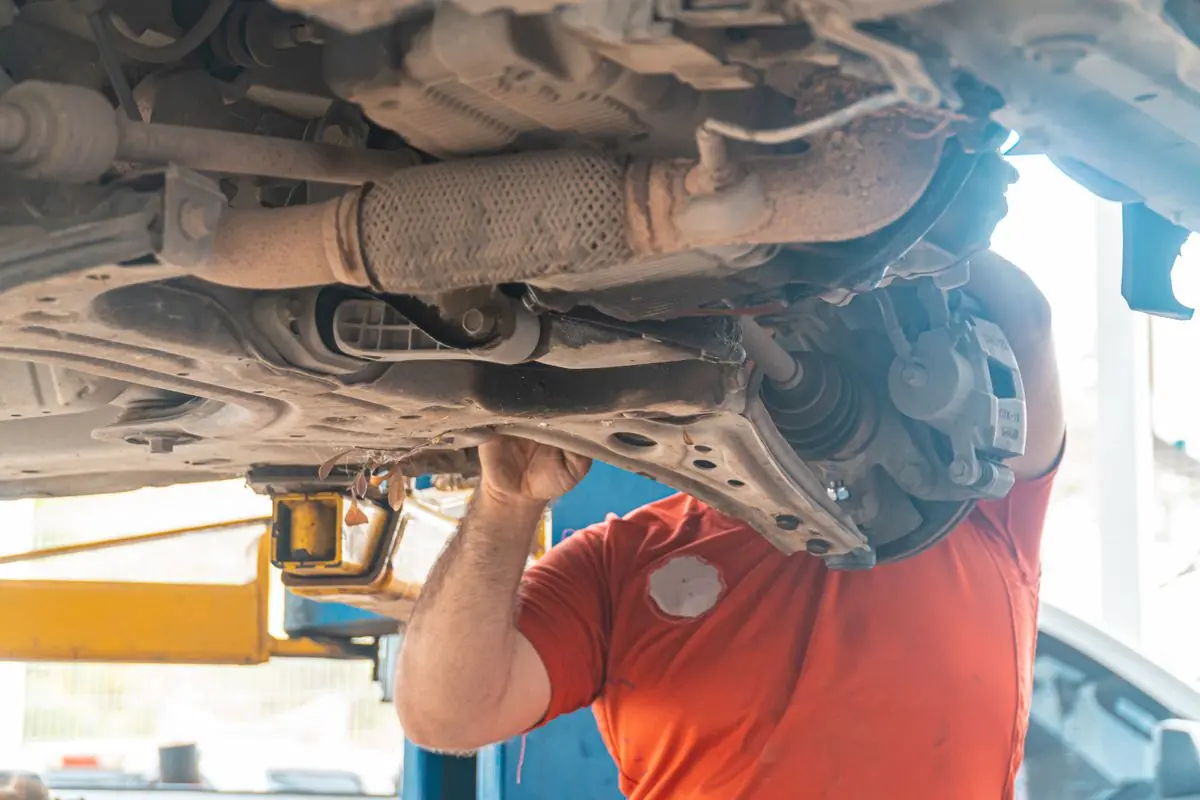
Step 3: Find the transmission pan. It is a flat metal pan under the transmission, near the middle of the car, with small bolts around the edge.
Step 4: Loosen the pan bolts. Place the drain pan underneath. Loosen the bolts a little at a time. If the pan has a drain plug, remove it first. If not, loosen one corner more so fluid drains from there.
Step 5: Remove the pan and inspect it. Take out the bolts and lower the pan. Fine metal dust on the magnet is normal. Big metal chunks are not. If you see chunks, see a professional.
Step 6: Replace the filter. Pull the old filter straight down. Push the new filter in until it seats. Replace the O-ring if the kit includes one.
Step 7: Clean the pan and fit the new gasket. Clean the pan and magnet with a rag. Scrape the old gasket off with a plastic scraper, never a metal one. A dab of oil soluble grease holds the new gasket in place.
Step 8: Reinstall the pan. Start all bolts by hand. Tighten them in a spiral pattern from the center outward to about 12 lb-ft (144 in-lb). Do not overtighten.
Step 9: Refill with new fluid. Lower the car. Find the dipstick under the hood. Add fluid slowly through a funnel. A service change needs about 8 to 12 quarts. Add 8 quarts first, then check.
Step 10: Check the level and look for leaks. Start the engine. Shift slowly through all gears, then put the car in Park. Check the dipstick. The fluid should sit between the low and full marks. The gap is about half a quart, so add small amounts. Check for leaks again the next day. Recycle old fluid at an auto parts store for free.
Cost: DIY vs Shop
The transmission fluid change cost depends on who does the work.
| Option | Total Cost |
|---|---|
| DIY drain and fill | $50 to $150 |
| Shop drain and fill | $130 to $250 |
| Professional full flush | $150 to $300 |
A DIY job is cheapest, and it lets you inspect the pan and magnet yourself. Compare that to a rebuild at $1,800 to $3,500.
Sealed Transmissions
Many newer cars have sealed transmissions with no dipstick. BMW, Mercedes, Audi, Toyota, Ford, Chevy, Hyundai, Kia, Subaru, and Nissan all sell models without one. The level is checked from a fill plug under the car, with the fluid at 95 to 113 degrees Fahrenheit. If your car has a sealed transmission, let a shop do it.
Mistakes to Avoid
- Wrong fluid. Always match the spec in your owner's manual.
- Overfilling. Too much fluid foams up and cannot lubricate well. Add small amounts.
- Overtightening pan bolts. They need only about 12 lb-ft.
- Skipping the filter. Change it with the fluid.
- Flushing a high mileage car. Over 100,000 miles with no history, use a drain and fill.
- Using a metal scraper. It scratches the gasket surface. Use plastic only.
Safety Note
Transmission fluid is hot after driving and can burn your skin. Wear gloves and safety glasses. Never work under a car supported only by a jack. Always use jack stands. Old fluid is toxic, so keep it away from children and pets and recycle it. If you are not sure about any step, ask a professional for help.
Frequently Asked Questions
How often should you change transmission fluid? Most cars need it every 30,000 to 60,000 miles. Severe driving needs the shorter interval. Check your owner's manual for the exact number.
Can I change transmission fluid myself? Yes, if your car has a dipstick and a removable pan. The job takes 45 to 90 minutes. If your car has a sealed transmission, a shop is the safer choice.
Is a transmission flush bad for high mileage cars? It can be. Over 100,000 miles with no service history, a flush can wash away sludge and cause sudden slipping. A drain and fill is safer.
How many quarts of transmission fluid do I need? A typical drain and fill needs about 8 to 12 quarts. Total dry capacity can be about 18 quarts. Check your manual for the exact amount.
What color should transmission fluid be? Fresh fluid is red or light pink. Dark brown or black means it needs changing. Milky pink means coolant is mixing in, so stop driving and tow the car.
What happens if I never change my transmission fluid? The fluid breaks down and stops protecting the parts. Shifting gets rough, the transmission slips, and parts wear out. A rebuild costs $1,800 to $3,500.
The Bottom Line
Changing your transmission fluid is a simple job with a big payoff. Follow the steps, use the right fluid, and do not rush. Your transmission will shift smooth for many more miles. Next, read our guide on how often should you rotate your tires to keep your tires in good shape.