
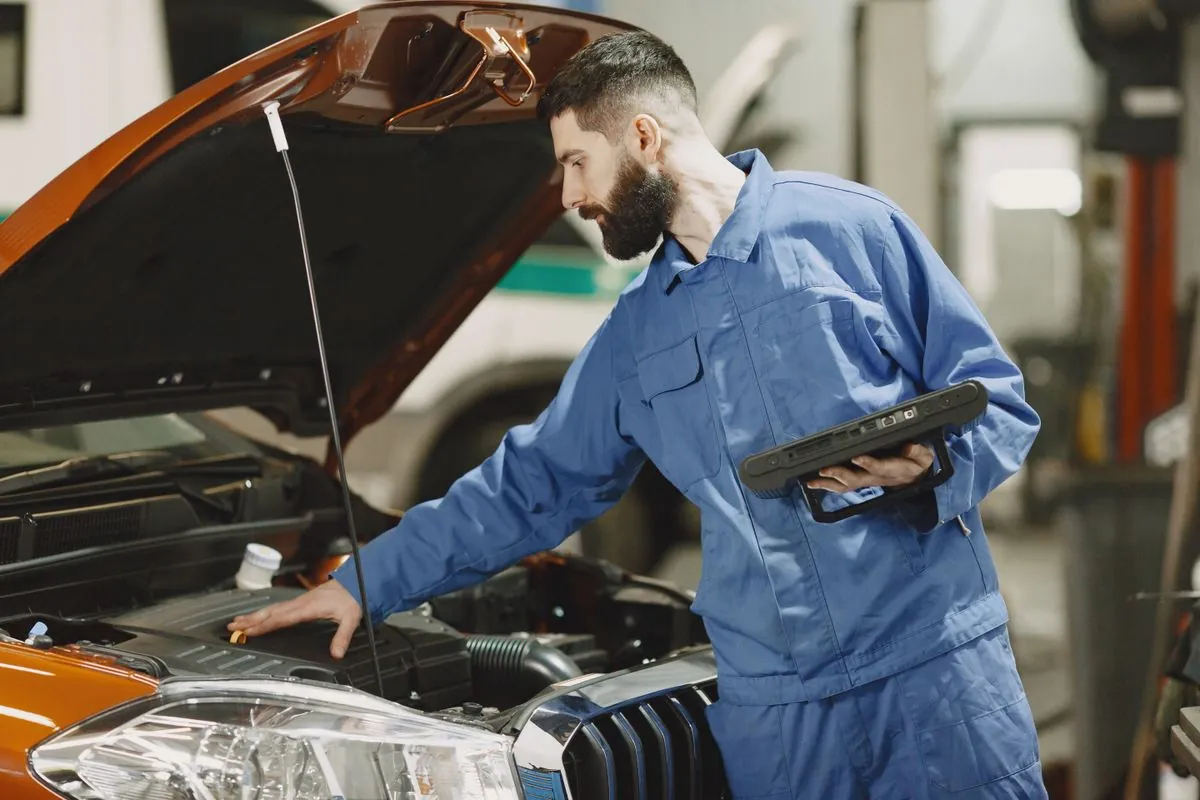
How to Check Coolant Level
Quick Answer: To check coolant level, wait until the engine is fully cold, park on level ground, open the hood, and read the fluid through the side of the translucent reservoir tank. The level should sit between MIN and MAX. Never open the cap on a hot engine. If low, top up with the coolant type in your owner's manual and find out why it dropped.
Why It Matters
To check coolant level, wait until the engine is fully cold, park on level ground, open the hood, and read the fluid through the side of the translucent reservoir tank. The level should sit between MIN and MAX. If below the low mark, top up with the coolant type in your manual and find out why it dropped.
Learning how to check antifreeze level is the same job: antifreeze is the concentrate, coolant is the mix that flows through your engine. AAA says coolant prevents freeze-up, raises the boiling point, and protects against rust all year.
Most engines run at 195F to 220F when warm, above the boiling point of plain water, 212F. The system stays liquid only because it is pressurized and the mix raises the boiling point. Low coolant removes that margin. Coolant also warms your cabin through the heater core. See our guide on how to winterize your car for the full winter checklist.
Cold Engine Only
Cold engine only. Never open the radiator cap or the reservoir cap on a hot engine.
A cooling system is pressurized, so fluid can run above 212F without turning to steam. Pressurized coolant can reach over 248F. Remove the cap hot and it can flash to steam and spray out.
Sources disagree on the wait: 30 minutes to overnight. Consumer Reports advises at least 3 hours before opening a cap. AAA says the best time is before the car has been started. Check first thing in the morning, when the reading is most accurate.
Safety note: Never open a cap on a hot engine. If you see steam, do not open the hood right away. Wait until fully cool, which can take an hour or more. Do not pour cold water on a hot engine.
You rarely need to open a cap. NHTSA guidance says not to remove the pressure cap for routine checks. Read through the plastic. Before opening a cap, squeeze the upper hose. If firm, wait longer.
Safety note: Coolant is toxic. Most antifreeze is ethylene glycol, which tastes sweet and attracts children and pets. Purdue University warns it is deadly if swallowed and toxic to the kidneys. Store jugs sealed and out of reach, wipe up spills, and never pour used coolant on the ground or into a drain.
What You Need
You need almost nothing.
- A flashlight: hold it behind a cloudy tank to see the level.
- A clean rag: to wipe the tank and clean around the cap before you open it.
- Your owner's manual: reservoir location and coolant spec.
- Gloves and a funnel (optional): only if you plan to top up.
No jack or tools. See how to check oil to pair the checks.
How to Check Coolant Level: 7 Steps
Follow these steps in order. They are also how to check antifreeze level, since the tank holds the coolant mix.
- Park on level ground and let the engine go fully cold. Check first thing in the morning, before the car has been started. Consumer Reports advises at least 3 hours before opening a cap.
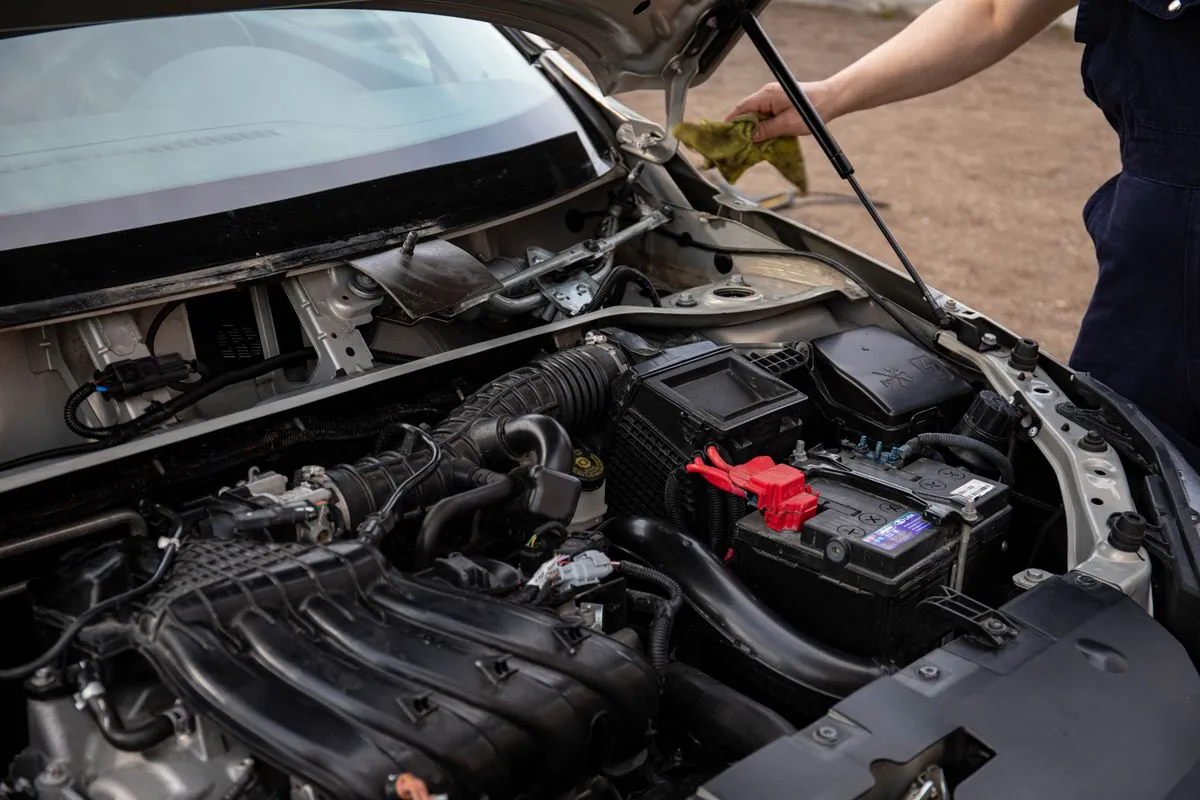
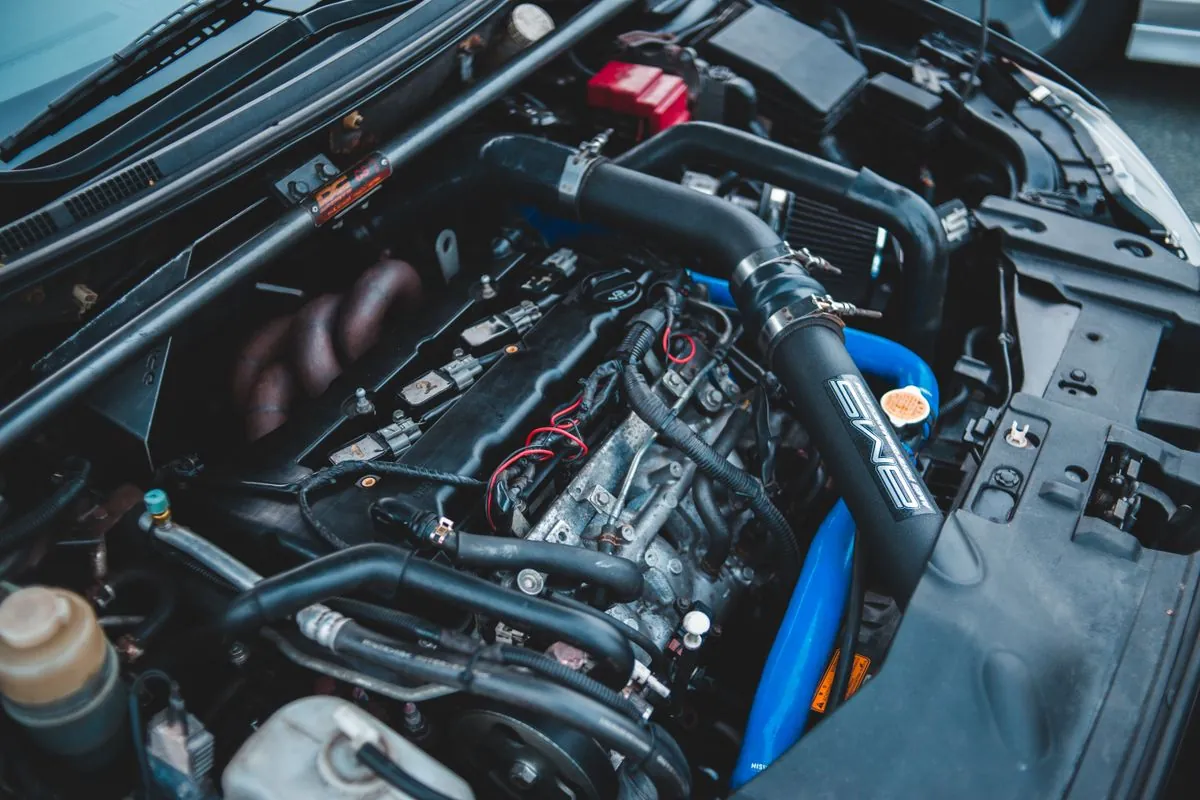
- Open the hood and find the coolant reservoir. It is a translucent plastic tank, usually near the radiator or on an inner fender panel. The cap often says Coolant or Engine Coolant.
- Read the level through the side of the tank. Do not remove the cap for a routine check. With a cold engine, the fluid should sit between MIN and MAX, or at the COLD line.
- Look at the coolant itself. It should look clean and clear in its normal bright color. Rusty brown liquid, floating debris, or a milky look means the system needs attention.
- Look around the engine bay and under the car. Check the hoses, the radiator, and the ground for drips or crusty residue. Hoses that feel brittle or spongy should be replaced.
- Top up only if the level is low, and only with the engine cold. Add the coolant type in your owner's manual, slowly, to the right mark. Do not overfill.
- Close the cap fully, close the hood, and recheck in a few days. Note the level so you can compare next time. If it drops again, find the leak.
The washer tank holds pale blue fluid. The coolant tank holds bright fluid with MIN and MAX marks. See how to check transmission fluid.
Reading the Reservoir
| Markings | Cold Reading | What It Means |
|---|---|---|
| MIN and MAX | Between the marks | Below MIN: top up. |
| L and F | Between L and F | At or below L: top up. |
| COLD and HOT | At the COLD line | Level climbs to HOT when warm. |
Read with your eyes level with the tank, not from above. Wipe dirt off the outside first. If the tank is cloudy, hold a flashlight behind it.
The level moves a little with temperature. Coolant expands when hot and shrinks when cold. Consumer Reports notes a small dip on a freezing morning can trigger the sensor. A dip above MIN is usually normal. It should not fall below MIN.
Sources conflict on the fill target. AAA says fill to the lower (cold) mark, not higher. Others say fill to MAX. Both agree: do not overfill. Follow the mark your manual names for a cold engine.
Coolant Reservoir: Good vs Low
Some cars also have a radiator cap. Check it only when cold, with no pressure. Coolant should sit within one inch of the filler neck. Many newer cars have no cap. On those, fill only through the reservoir.
Low Coolant Level Symptoms
Low coolant level symptoms often show up before you open the hood. Check the reservoir, cold, if you notice any of these.
- Gauge climbing: the needle creeps past its normal middle position.
- Warning light: a thermometer symbol or low coolant message. See car dashboard symbols and meanings.
- Weak heat: the heater blows cool after the engine is fully warm.
- Sweet smell: coolant smells sweet and syrupy, inside or outside the car.
- Steam: coolant is boiling or leaking onto hot parts.
- Bright puddles: colored fluid under the front of the car.
- Gurgling: air in the system bubbling behind the dashboard.
- Repeat top-ups: a sealed system should not need frequent refills.
Symptoms alone are not proof. A rising gauge can also mean a stuck thermostat, fan fault, pump problem, blocked radiator, or bad sensor. Some cars have no low-coolant sensor, so no light does not prove the level is correct. Confirm with a cold check.
Safety note: If the gauge spikes, steam appears, or heat goes cold, pull over and switch off. Do not keep driving or open any cap while hot.
What Low Coolant Means
Low coolant is a symptom. A sealed system does not consume coolant like an engine consumes oil. If the level keeps dropping, the fluid is going somewhere. Find the leak.
| What You Notice | Likely Cause | What to Do |
|---|---|---|
| Drips or crusty residue at hoses | Hose or clamp leak | Top up cold. Fix soon. |
| Puddle under the front | Radiator, hose, or pump leak | Do not drive far. |
| Level drops, no puddle | Worn cap or hidden leak | Get a pressure test. |
| White smoke, milky oil, bubbles | Possible head gasket fault | Stop driving. Get it inspected. |
| Sweet smell, foggy glass, damp carpet | Heater core leak | Get it checked promptly. |
Check the radiator cap. It holds pressure and lets coolant move to and from the reservoir, releasing at about 13 to 16 psi. If the seal looks cracked, replace it with the correct cap, cold.
Log each top-up: date, amount, and level. Check weekly for a month. If the level holds, the problem is solved. If it drops, show the log to a shop. Low coolant can also set a check engine light. Use our OBD2 code lookup tool and read what does check engine light mean.
How to Top Up Coolant
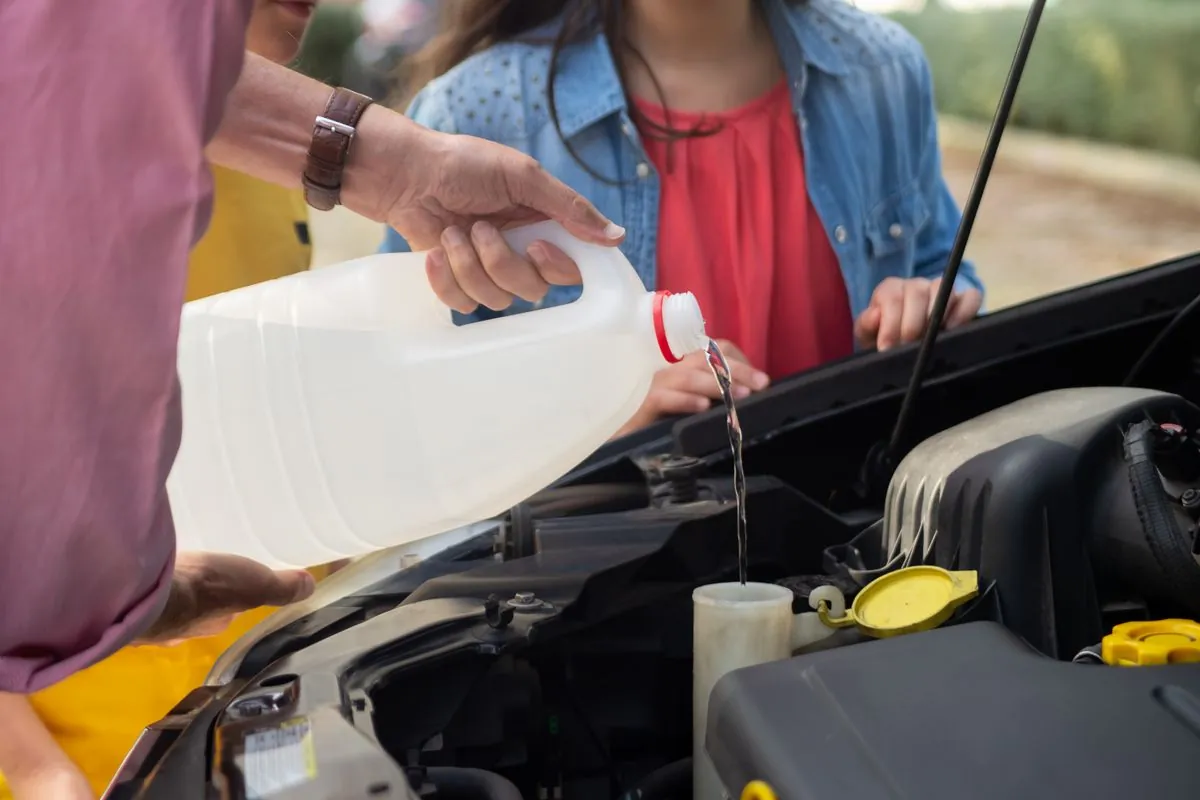
Confirm the engine is fully cold. Clean around the cap. Remove it slowly, a quarter turn at a time, and stop if you hear a hiss. Pour in the right coolant slowly, with a funnel. Mix concentrate first, as the label directs. Stop at the right mark, refit the cap, wipe up spills, and recheck cold after a few drives.
Water only in an emergency, to finish a trip. It freezes sooner, boils sooner, and has no rust protection. Get the mix corrected with the right coolant as soon as you can.
Do not mix coolant types unless your manual says it is safe. Mixing can reduce protection and form deposits that block narrow passages. If the type in the system is unknown, top up with the correct spec and mention it at the next service.
The 50/50 Coolant Mix
Pre-mixed coolant, labelled 50/50, goes straight in. Concentrate must be mixed with water first. Never pour in neat concentrate. Pure ethylene glycol freezes at about 9F and carries heat less well than water.
The standard mix is half antifreeze and half water. From the PEAK and Prestone spec sheets, in Fahrenheit:
- Freeze protection to -34F. Plain water freezes at 32F and expands, which can crack a block.
- Boil protection to 265F with a 15 psi cap. Without pressure, the same mix boils at about 226F.
- Rust protection all year. The inhibitors protect metal and rubber. Plain water gives none.
The 2012 Chevrolet Cruze manual gives the same figures. Toyota says the same: coolant is neither plain water nor straight antifreeze.
Stronger is not better. Past about 60 percent, you remove the water that does the heat transfer. The ASTM D3306 range is 40 to 60 percent, with 50/50 standard. Mix with distilled water, not tap water, which leaves scale.
Coolant Color
Do not buy coolant by color. Coolant is dyed so you can see it and spot leaks. The dye is not a standard. Two bottles of the same color can hold different chemistry.
Valvoline puts it bluntly: green does not mean IAT, orange does not mean OAT, and pink does not mean Asian-spec. Match the spec in your manual: an OEM number, a technology such as OAT or HOAT, or a name such as GM Dex-Cool. Buy a bottle whose label lists that spec.
Color does show condition. Healthy coolant looks bright and clear. Brown, rusty, or murky fluid signals corrosion or old, depleted coolant. A milky look means oil and coolant may be mixing. Rusty or milky fluid needs a drain and diagnosis, not a top-up.
Old coolant can look fine and still be worn out. Once the inhibitors are spent, it corrodes the radiator, pump, and heater core from inside. Follow the change interval in your manual.
Heater Blows Cold
Your heater borrows heat from the engine. Hot coolant flows through the heater core, and the fan blows cabin air across it. No hot coolant at the core means cold air, no matter how high you set the dial.
The core sits high, so low coolant starves it first. Lukewarm heat is often the earliest sign, before the gauge moves. If heat goes cold, check the level, cold, first.
Other causes: a thermostat stuck open, clogged core, stuck blend door, trapped air, or failing pump. If the gauge climbs while heat goes cold, stop driving. For heater checks, see how to winterize your car.
Coolant Flush Costs
A flush replaces old coolant with fresh fluid. A drain-and-fill is simpler. Costs vary by car and labor rates. These dated US estimates are for planning. Get an itemized quote.
| Service | Estimate (US, Nov 2026) | Source |
|---|---|---|
| Flush, national average | $131 to $209 | Kelley Blue Book |
| Flush, chain exchange | $90 to $160 | Take 5 |
| Flush, dealership | $200 to $250 | Kelley Blue Book |
| Drain-and-fill | $80 to $150 | Jerry, Nov 3, 2026 |
| DIY supplies | $20 to $40 | GarageHub |
| Gallon of pre-mixed 50/50 | $15 to $30 | Typical retail |
Estimators disagree. RepairPal put the average at $440 to $512 in September 2026, far above Kelley Blue Book. Ask what a quote includes: coolant, labor, disposal, and a pressure test. A top-up is cheap. The costly part is damage from driving low or on worn-out coolant.
How Often to Check and Change Coolant
Check the level often. Change the fluid on the manual schedule. They are different jobs.
- Monthly: a cold look at the reservoir and under the car. Check before long trips too.
- Every couple of weeks in winter: cold is hard on hoses.
- At every oil change: pair the two checks so neither is forgotten.
- Weekly for a month after a top-up: this proves the level holds.
Pair it with a tire check. Both are cold checks. See how to check tire pressure.
Change intervals vary. AAA puts older IAT coolant at 2 years or 24,000 miles, and long-life OAT and HOAT at 5 years or 50,000 miles. Other guides put long-life coolant at 100,000 to 150,000 miles or 5 to 10 years. Toyota lists the 2025 Corolla first change at 100,000 miles or 10 years. Follow your manual. Time matters as much as miles.
Test freeze protection yearly where winters are hard. AAA notes an inexpensive parts-store tester can check it. Hybrids and EVs may have separate loops for engine, inverter, and battery. Do not top up a battery loop with the wrong coolant.
Troubleshooting
- Slightly low on a freezing morning, above MIN: often normal contraction. Recheck on a milder day.
- Below MIN when cold: top up and monitor. A repeat drop means a leak.
- Reservoir empty: do not keep driving. Top up only when cold. Tow it if it overheats.
- Above MAX when cold: overfilled. Remove a little with a turkey baster or siphon pump.
- Rusty or full of debris: drain and refill. Do not just top up.
- Milky or oily: oil and coolant may be mixing. Stop driving. Get a diagnosis.
- Sweet smell, no puddle: look for crusty residue at hose joints, radiator, and pump.
- Gauge rises after topping up: trapped air, or a thermostat, fan, or pump fault.
Frequently Asked Questions
How often should I check my coolant level?
About once a month and before long trips, always with a cold engine. Check every couple of weeks in winter and at every oil change. If it keeps dropping, check weekly.
Can I check the coolant level when the engine is hot?
No. Never open a cap on a hot engine. The system is under pressure and hot coolant can spray out and cause serious burns. Wait until the engine is fully cold. Consumer Reports advises at least 3 hours after switching off.
How do I know which coolant my car takes?
Check your manual for the coolant specification. Match the spec on the bottle label to the manual. Do not choose by color. Color is only dye.
Can I top up coolant with water?
Only in an emergency, to finish a trip. Water alone freezes sooner, boils sooner, and has no rust protection. Get the mix corrected with the right coolant as soon as you can.
Is it safe to drive with low coolant?
Only briefly, while the gauge stays normal. If the gauge climbs, steam appears, or the heater blows cold, pull over and switch off. Driving an overheating engine can warp the cylinder head or damage the head gasket.
Why does my heater blow cold air when coolant is low?
Your heater gets heat from hot coolant in the heater core, a small radiator behind the dashboard. The core sits high in the system, so low coolant starves it first. Weak heat can be the earliest sign of low coolant.
Reviewed by the AutoFixr Editorial Team. Facts were checked against AAA, Consumer Reports, NHTSA, Chevrolet and Toyota manuals, Valvoline, and Kelley Blue Book. Always follow your owner's manual.