

Car Won't Start in Cold Weather? What to Do Next
Quick Answer: Turn off all lights and accessories, then make one short start attempt and listen. Rapid clicking or slow cranking usually means a weak battery. One click with bright lights points to the starter. Normal cranking that never catches points to fuel or ignition. Never jump a frozen, swollen, cracked, or leaking battery.
Why Cold Weather Stops a Car From Starting
If your car won't start in cold weather, the most likely cause is a weak 12-volt battery. Cold hits your car from two directions at once. The battery makes less power, and the engine needs more power to turn over. Turn off all lights and accessories, make one short start attempt, and listen. The sound tells you whether the problem is the battery, the starter, or something else.
The National Highway Traffic Safety Administration (NHTSA) says battery power drops as it gets colder, right when gas and diesel engines need more of it to start. AAA reports that a battery loses about 35 percent of its strength at 32 degrees Fahrenheit and about 60 percent at 0 degrees, while a cold engine can need up to twice the normal current. AAA Northeast gives a slightly different figure, up to 50 percent lost near 0 degrees. Cold also thickens engine oil, so use only the grade in your manual, and check the level with our guide on how to check oil. For full winter prep, see our guide on how to winterize your car.
What You Hear Tells You What Is Wrong
Make one short start attempt with the accessories off. Watch the dashboard and listen. Cranking means the starter is turning the engine. If it cranks at normal speed but never fires, more battery power probably will not fix it. Find your sound in the table. Symptoms can overlap, so testing confirms the cause.
| What You Hear or See | Most Likely Cause | What to Do Next |
|---|---|---|
| Silence, no lights | Dead battery or cable fault | Check connections, get help. |
| One single click, bright lights | Starter, relay, or cable fault | Get the starter circuit tested. |
| Rapid clicking, dim lights | Weak battery, poor connection | Jump if safe, then test battery. |
| Slow, weak cranking | Low battery power, thick oil | Stop cranking, test the battery. |
| Cranks normally, never starts | Fuel, ignition, or sensor fault | Check fuel, call a mechanic. |
A single click does not prove the starter failed. Normal cranking with no start means the battery is probably not the problem.
Cold Start Triage: What You Hear and What to Do
What to Do When Your Car Won't Start on a Cold Morning
Follow these steps in order.
- Turn off every electrical load. Switch off the lights, heater fan, defroster, seat heaters, radio, and chargers.
- Check the gear, key, and fuel. An automatic must be in Park or Neutral. For a key warning, hold the fob to the start button. Check the fuel gauge.
- Clear snow from the tailpipe, hood, and windshield. A blocked tailpipe can let carbon monoxide build up. Never run the engine in a closed garage.
- Make one short start attempt and listen. Try for a few seconds, watch the dash lights, and note the sound. Match it in the decision table.
- Rest about a minute between tries. Stop after two or three attempts. Repeated cranking drains the battery and can overheat the starter.
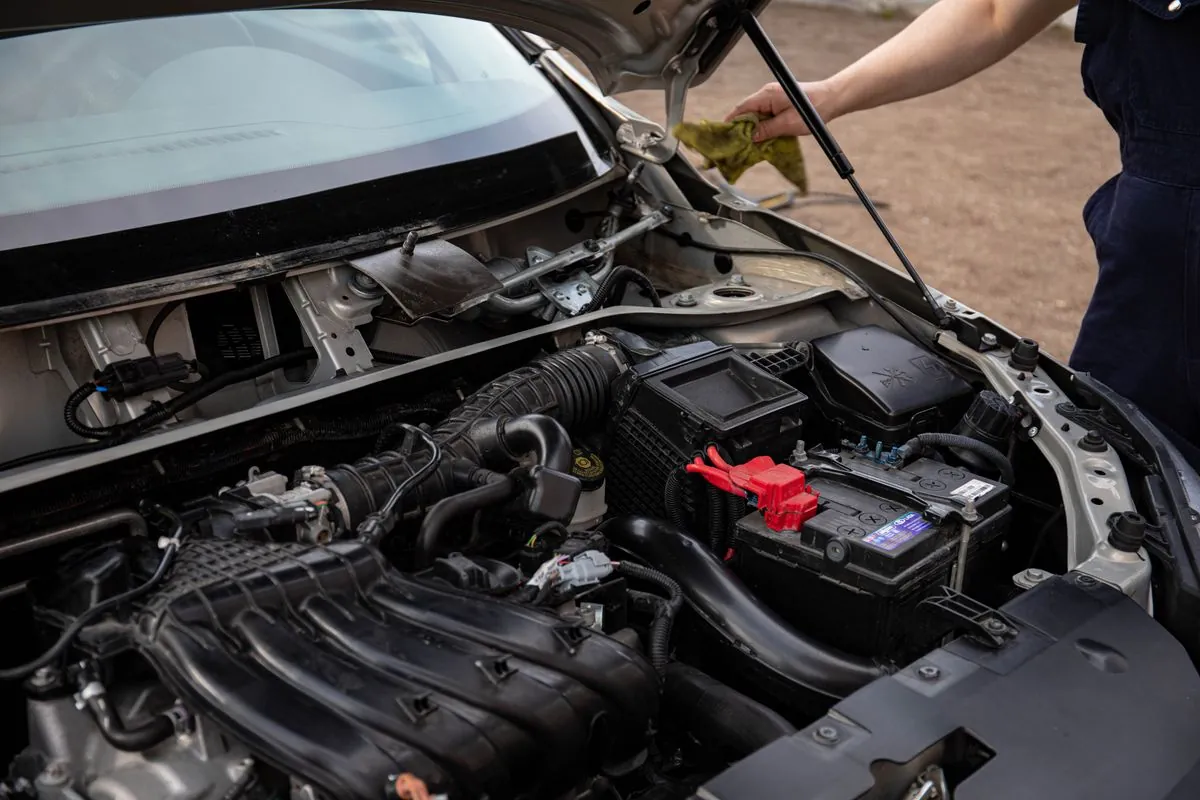
- Check the battery for damage. Do not jump a battery that is frozen, swollen, cracked, or leaking, or that smells of sulfur. Call for help instead.
- Check the connections. Look for a loose clamp, corrosion, or a damaged cable. Do not touch corrosion with bare hands.
- Jump start only if the battery passed the safety check. Follow the cable order in this guide, drive at least 30 minutes, then get a free battery test.
Safety note: do not jump a frozen, swollen, or cracked battery. Never jump start a battery with a cracked, bulging, or leaking case, one that might be frozen, or one that smells strongly of sulfur. A frozen battery can rupture or explode. A discharged battery can freeze at about 15 degrees Fahrenheit, per Interstate Batteries. Do not shake, charge, or jump a battery you think is frozen. Call roadside assistance.
How to Jump Start a Car in Cold Weather
You can jump start a car in cold weather, including below freezing, as long as your manual allows it and the battery is not frozen or damaged. A jump helps when low battery power is the problem. It will not fix a failed starter or a fuel fault. Check both owners manuals first, because some cars have remote jump points and hybrids may have their own rules.
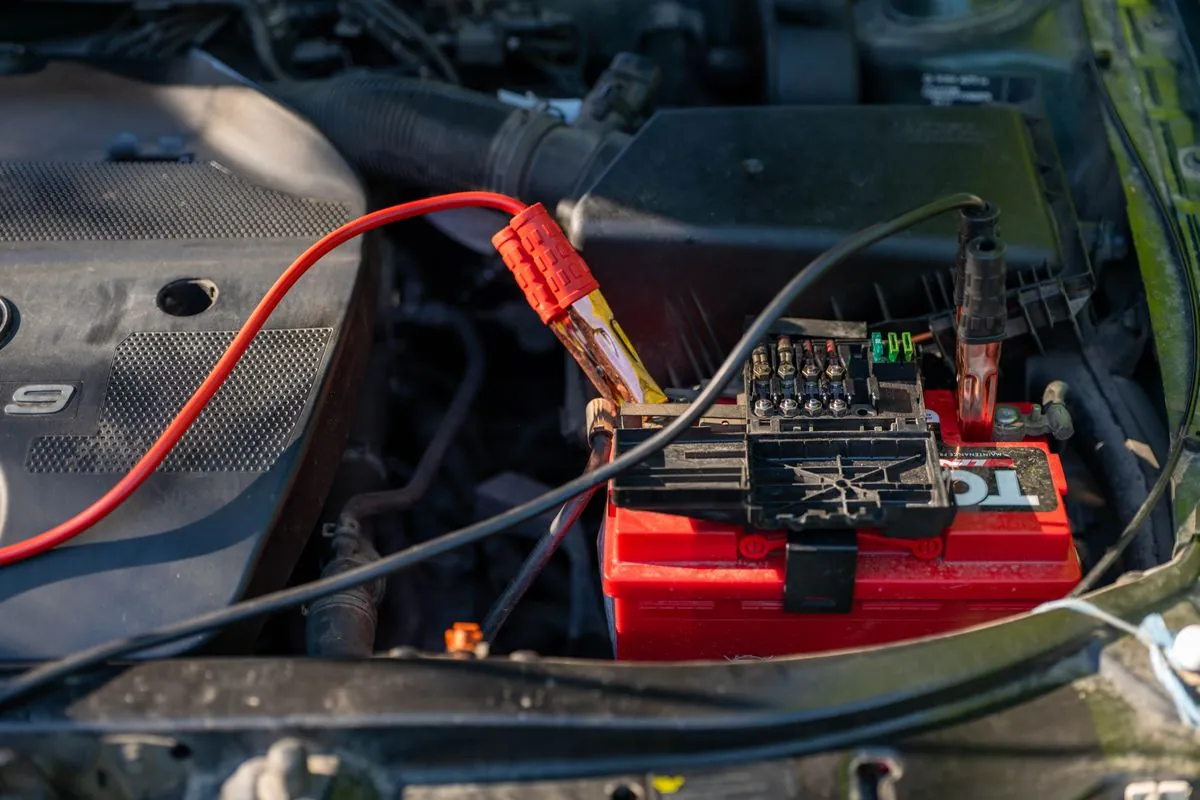
- Position the cars. Park close enough for the cables, but do not let the cars touch. Both in Park, brakes on, engines off.
- Red to dead positive. Attach one red clamp to the positive terminal on the car that will not start.
- Red to donor positive. Attach the other red clamp to the positive terminal on the donor car.
- Black to donor negative. Attach one black clamp to the negative terminal on the donor car.
- Black to bare metal. Attach the last black clamp to clean, unpainted metal on the dead car, away from the battery and fans.
- Start the donor car. Let it idle a few minutes. Keep cables clear of moving parts.
- Try the dead car. Make one short attempt. If it does not start, stop and get help.
- Remove in reverse order. Black from ground, black from donor, red from donor, then red from the jumped car.
For the full procedure, see our guide on how to use jumper cables. A portable jump starter is often safer in winter, because you need no second car on snow or ice. Use the same order, wait for the ready signal, and disconnect black first, then red.
Safety note: Batteries can give off gas, so keep sparks and flames away. Reversing the clamps can damage electronics. Never touch orange high-voltage cables in a hybrid or electric car.
After a Jump Start: Drive, Then Get a Free Battery Test
A jump gets the engine running, but it does not mean the battery is healthy. Sources disagree on drive time. Sid Dillon says about 20 to 30 minutes of driving may help replenish some charge. AutoZone says to drive for at least 30 minutes at highway speeds, and that a seriously discharged battery may need several hours. Interstate Batteries says 15 to 20 minutes is usually enough under normal conditions, but a deeply drained battery can take many hours and may need a plug-in charger.
Drive for at least 30 minutes at highway speeds, with accessories off where you can. Do not count on idling. AutoZone says a 30 minute idle with lights and radio on may add no net charge at all. A plug-in charger is the better way to restore a deeply discharged battery, and charger charging takes 2 to 12 hours. Then get a free battery and charging system test. AutoZone offers free battery testing and charging. Voltage alone does not prove health, because a battery can read 12.6 volts and still fail under load. If the car struggles the next morning, see our guide on how to replace a car battery. If a charging warning stays on, stop safely and call for a tow.
Why Your Battery Loses Power in the Cold
Most gas and diesel cars use a 12-volt lead-acid battery to run the starter. The chemical reaction inside it slows in the cold, so it delivers less current just when the engine needs more. Age is the biggest warning sign. AAA puts average battery life at 3 to 5 years, with 5 years or longer in cooler northern climates and about 3 years in hot southern locales. AAA recommends testing a battery once it turns 3 years old, and every year after.
Cold cranking amps, or CCA, is the rating that matters in winter. OPTIMA Batteries explains the test. A new, fully charged battery is chilled to 0 degrees Fahrenheit, and CCA is the current it can deliver for 30 seconds while staying at or above 7.2 volts. Match or beat the CCA your maker specifies. OPTIMA says a big surplus, like an extra 300 CCA, usually is not necessary.
A multimeter shows charge, not full health. Interstate Batteries gives these readings, tested after the car has sat for a few hours with everything off.
| Reading | What It Means | What to Do |
|---|---|---|
| 12.6 volts or higher, engine off | Fully charged | Load test to confirm health. |
| Below 12.6 volts, engine off | Not fully charged | Charge it, test again. |
| 11.9 volts or below | Dead, per Interstate | Charge and test, or replace. |
| About 13.7 to 14.7 volts, running | Alternator charging | Normal range. |
| Near 12 volts, running | Alternator may not charge | Get the system tested. |
Small drains can push a weak battery over the edge. A light that stays on, a charger left in a powered socket, or a dash cam without a low-voltage cutoff can drain it overnight.
Other Causes: Starter, Fuel, Oil, and the Key Fob
Starter motor or circuit. The starter turns the engine until combustion takes over. If the starter, solenoid, relay, or wiring fails, you can have cabin power without the engine turning. A single click is one symptom, but low voltage can cause the same click, so test before replacing any part.
Charging system. If the alternator is not working right, the battery ends up discharged after driving. The car starts after a jump, runs a while, then fails again. Charging warnings or dimming lights can also appear. A battery and charging system test can tell which part is at fault.
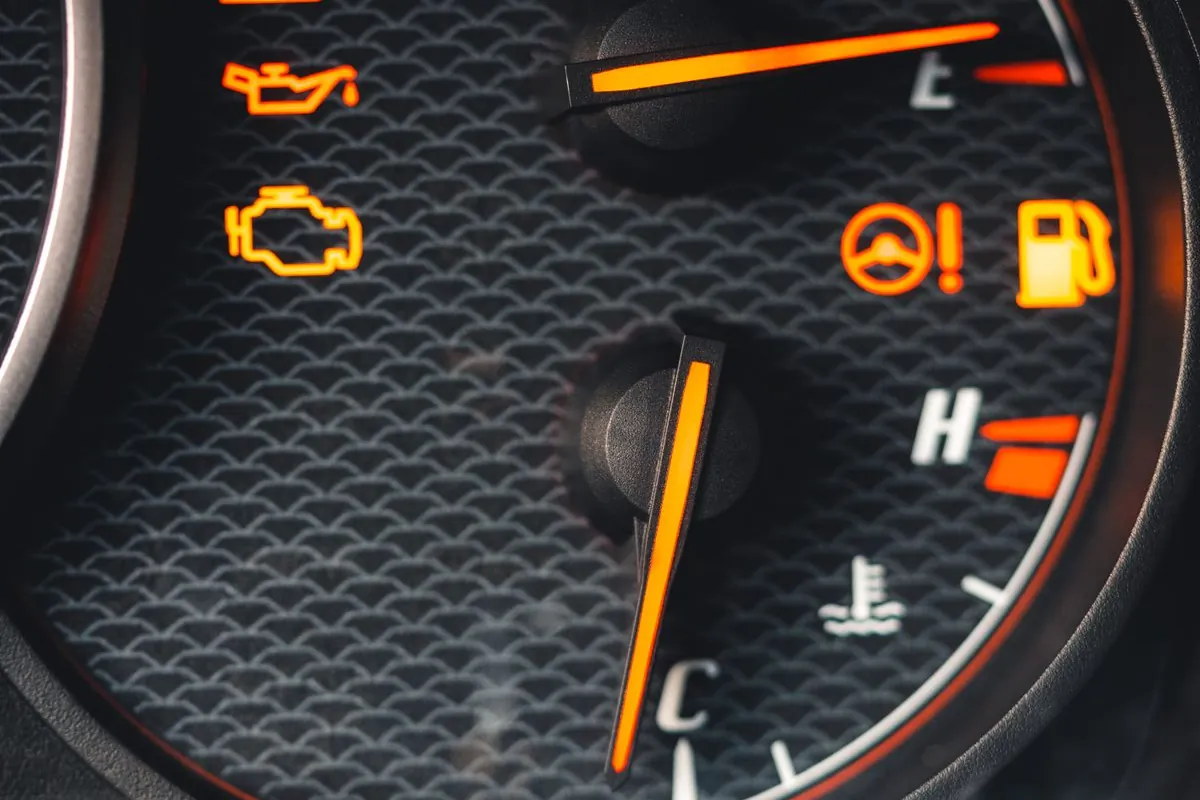
Fuel, ignition, and sensors. If the engine cranks normally but never runs, fuel delivery, ignition, sensors, or a security fault may be stopping combustion. Water in the fuel can freeze and restrict flow. If the check engine light is on, read the code first with our OBD2 code lookup tool, and see our guides on what does check engine light mean and why is my check engine light on. For warning lights, see car dashboard symbols and meanings.
Oil, diesel, and the key fob. Thick oil makes the engine harder to turn, so use only the grade in your manual. Diesel fuel can form wax crystals in severe cold that restrict fuel filters, so use winter grade fuel and follow your manual. Fob batteries weaken in the cold too, so a key not detected warning may only need the spare key.
What the Fix May Cost
These are US estimates from repair guides checked in November 2026, based on RepairPal, Kelley Blue Book, and CarMD figures. They cover parts and labor before tax for a typical mainstream car. They are not quotes. Always get a written estimate first.
| Fix | Typical US Range | Notes |
|---|---|---|
| Battery and charging test | Free at many parts stores | AutoZone offers free testing. |
| Battery replacement, installed | $150 to $450 | More for AGM, some newer cars. |
| Starter replacement | $300 to $900 | Dealers can run 20 to 30 percent higher. |
| Alternator replacement | $400 to $1,000 | Labor swings the price most. |
| No-start diagnosis | About $50 to $180 | About one labor hour. |
Test first. A new battery will not fix a damaged cable, and a new starter will not fix a weak battery.
How to Prevent Cold Weather Car Starting Problems
Cold weather car starting problems are often preventable with a few fall checks. See our full guide on how to winterize your car.
- Test the battery before winter. Test in October or November, especially at 3 years old or more. NHTSA recommends checking the battery, charging system, and belts.
- Keep terminals clean and tight. White or green crust blocks power. Get damaged terminals repaired properly.
- Use the right oil and fluids. Use the oil thickness your maker approves, with the right coolant mix and winter washer fluid.
- Combine short trips. Let the car reach full operating temperature when you can.
- Switch accessories off before shutdown. Turn off the blower and lights so they do not load the battery at the next start.
- Keep the tank close to full. NHTSA recommends this. It helps avoid ice in the tank and fuel lines.
- Check tires and pack a kit. AAA says tires lose about one pound of pressure for every 10 degree drop. See how to check tire pressure. Pack the NHTSA kit: shovel, ice scraper, sand, jumper cables, flashlight, first aid kit, blankets, phone charger, water, food, and medicine.
Slow cranking and dim lights mean the battery needs a check now.
When to Call a Mechanic or a Tow
Call roadside assistance, a mechanic, or a tow if any of these apply.
- The battery is frozen, leaking, swollen, cracked, or hot, or you smell sulfur, see smoke, or hear sizzling.
- The spot is unsafe, with traffic, darkness, or dangerous weather.
- You cannot tell which jump points to use, or your manual says not to jump start the car.
- A correct jump gives no normal cranking, or the engine cranks normally but never starts.
- The car starts and then stalls, a charging warning stays on, or the no-start keeps coming back.
- Anyone is hurt, the car is in a travel lane, or you smell fuel. Call 911 first.
If stranded in snow, NHTSA says to keep the exhaust pipe clear and run the engine only now and then for warmth. Before you call, note the sound, dash lights, warnings, and temperature.
Frequently Asked Questions
Why does my car click but not start in cold weather?
Fast clicking usually means the battery lacks power to turn the starter, or a connection is poor. One strong click with bright lights can point to the starter or a cable. A voltage and load test can tell which one it is.
Can you jump start a car in cold weather?
Yes, if your manual allows it and the battery is not frozen, swollen, cracked, or leaking. Connect red to dead positive, red to donor positive, black to donor negative, and black to bare metal away from the battery.
How long should I drive after a jump start in cold weather?
Sources differ. Sid Dillon says about 20 to 30 minutes may help. AutoZone says at least 30 minutes at highway speeds, and several hours for a seriously discharged battery. Get a free battery test after your drive.
How cold does it have to be for a car battery to stop working?
There is no single temperature. AAA reports a battery loses about 35 percent of its strength at 32 degrees and about 60 percent at 0 degrees, while a cold engine can need up to twice the normal current.
Why does my car start after a jump but not the next morning?
The battery may not hold a charge, the alternator may not recharge it fully, or something may drain power while parked. A jump does not repair a battery that lost capacity. Get the battery and charging system tested.
Why won't my car start in the cold but starts when it is warm?
Cold cuts battery power and thickens oil at the same time, so a weak battery can fail on a cold morning and work when it warms up. That does not mean it is healthy. Have it tested before the next cold snap.
Reviewed by the AutoFixr Editorial Team. Every fact in this guide was checked against sources read on November 17, 2026, including AAA battery guidance as reported by AAA regional clubs, NHTSA winter driving guidance, Interstate Batteries and OPTIMA Batteries ratings, and AutoZone charging guidance. Costs are US estimates from guides checked in November 2026 and vary by vehicle and shop. Always follow your owner's manual.